How to Reduce Glare from Outdoor Security Lights
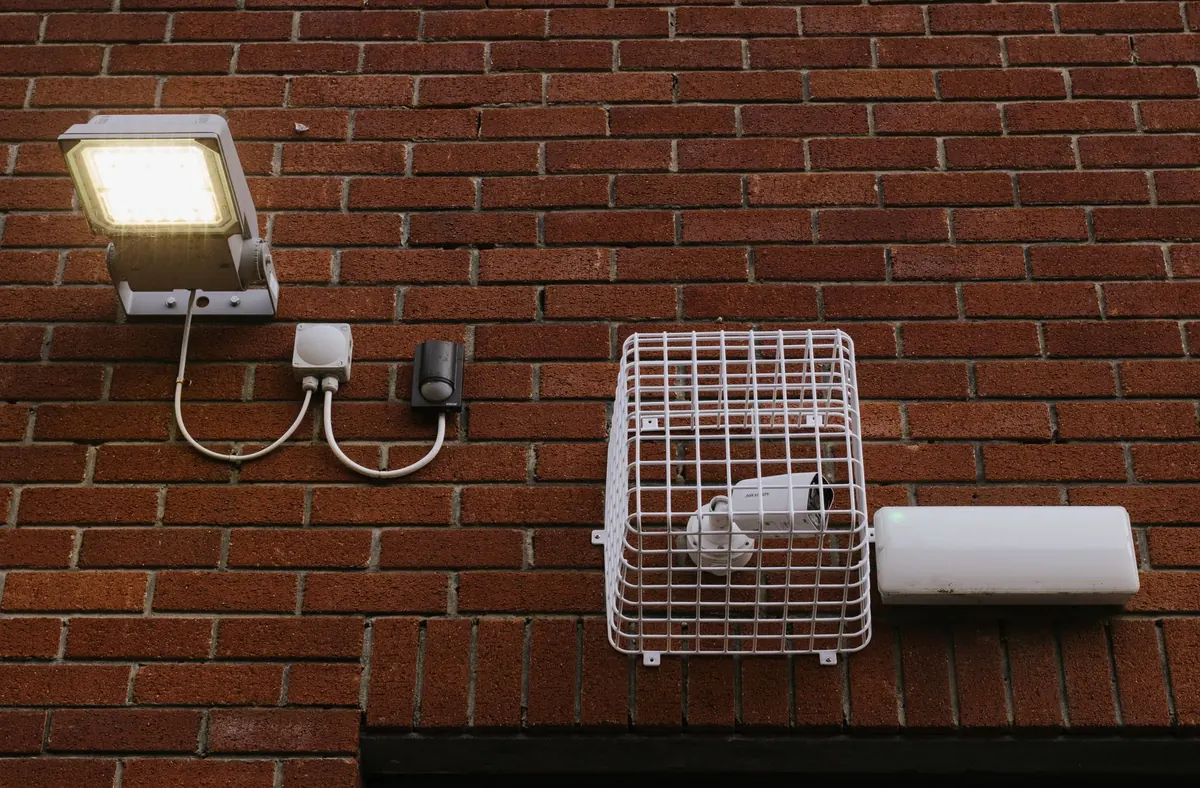
A security light should make a stranger feel noticed, not blinded. Yet most of us have walked past a house where a floodlight fires straight into the street, and the effect is the opposite of reassuring: you shield your eyes, lose your night vision and hurry on. The good news is that glare is almost always a setup problem rather than a hardware problem. Half an hour with a step ladder and a screwdriver is usually enough to turn a nuisance fitting into something quietly effective — and it will light your own path better at the same time.
Start by Looking at Your Light from Outside
Before you adjust anything, go and see what everyone else sees. Stand on the pavement after dark, ideally at your neighbour's gate or from their upstairs window if you get on well enough to ask. Ask someone to walk across the sensor while you watch the beam.
Two things are worth noting. First, can you see the lamp itself — the bright source — or only the pool of light it makes on the ground? If the source is visible, that is glare, and it is what irritates people. Second, where does the beam actually land? If it grazes the road, a parked car, a boundary fence or a neighbour's back wall, you have your answer.
Modern LED fittings often glare worse than the old bulkier ones because the light comes from a small, intense surface. If your neighbour has never said anything, that does not mean they have not noticed. Most people simply put up with it.
Aim the Beam Down, Not Out
A floodlight fitted level, or pointing slightly upwards, throws its beam straight over the fence line and into somebody's sightline. Tilting it down is the single most effective fix, and it costs nothing.
- Work in the dark, with the light held on constant or the sensor covered so it does not switch off while you are adjusting it.
- Switch the power off at the isolator before loosening the bracket, then reposition the head by hand.
- Tilt it so the beam meets the ground roughly two-thirds of the way along the area you want lit. The near ground catches plenty of spill anyway.
- Keep the outer edge of the beam inside your boundary where you can, particularly on the side nearest a neighbour's window or patio.
- Restore the power, then walk to the far end of the beam and look back at the fitting. If you can stare into it comfortably, it is aimed properly.
Adjust in small steps. A few degrees of tilt makes a surprising difference at the far end of a beam, and it takes seconds to re-tighten the bracket and check again.
Shield the Sides You Don't Need Lit
Aiming fixes most of the problem, but a shield deals with the light that spills sideways. You do not need to light your neighbour's bedroom wall to light your own back door.
- Cowls and visors. Many floodlights accept a clip-on hood that cuts the top and side spread of the beam. Cheap, effective and easy to fit.
- Glare shields or baffles. Louvre or honeycomb inserts break up the beam and soften the hard edge that catches the eye.
- A partial shield. On a fitting where only one side causes trouble, a metal or uPVC plate fixed to that side is often enough.
- A different fixture. If the light is beyond saving, swap the floodlight for a downlight-style wall lantern that throws light down and outward only, or a dedicated full cut-off design.
Never box a lamp in tightly, and always check the fitting's instructions — some need ventilation around the head, and outdoor electrical work is best done, or at least checked, by a qualified electrician.
Turn the Brightness and the Colour Down
Brighter is not safer. An over-powered light wrecks your own night vision, creates hard shadows a prowler can hide in, and makes the glare problem worse for everyone within fifty metres. A doorway or path rarely needs more than a few hundred lumens.
If your fitting has dual brightness, use it: a low level that stays on all evening, rising to full brightness only when the sensor triggers. That is far kinder than a sudden blast of light, and it still tells a visitor they have been noticed.
Colour temperature matters too. Warm white light around 2700–3000K reads as gentler than the cold, blue-white light of many budget fixtures, which scatters more in the air and feels harsher to look at. If you are buying new, choose a warm or neutral option and check the lumen output before the wattage.
Get the Sensor Settings Right
Most sensors have three controls: range, sensitivity and time. All three are worth a few minutes of fiddling.
Turn the range down so the light no longer triggers for every passing pedestrian, car headlight or cat on the wall. Point the sensor away from the road and away from anything that moves on its own — swaying branches are a common culprit. Then shorten the on-time. A minute or two is plenty for getting from the car to the door and finding your keys; a ten-minute blaze every time a fox walks past will test anyone's patience.
Position and Height Matter More Than You Think
Fitting a light high under the eaves feels tidy and covers a lot of ground, but it puts the lamp close to eye level for anyone approaching and forces the beam to travel much further, which means more spill. A fitting mounted lower — around two to two and a half metres — and closer to what you are lighting throws light down exactly where it is needed.
Two modest lights generally beat one large one, and a little repositioning can be transformative. Moving a fitting a metre along the wall, away from a neighbour's patio or bedroom window, often solves a problem that no amount of re-aiming would. Also watch for reflective surfaces: white render, glass, parked cars and metal sheds all bounce light back out over the boundary.
Check It Again, Then Check In
Once you have made your changes, repeat the walk-around: pavement, boundary, upstairs windows, and the spot where you park. Live with it for a week, because a setting that looks fine at nine in the evening may behave differently at midnight.
If you are on good terms with your neighbours, ask them outright whether your light bothers them. Most are happy to say yes when asked directly, and a small adjustment now is far easier than a grievance later.
If you are on the receiving end of someone else's glare, a polite word usually works, and it is worth mentioning that you can see the lamp from inside your home — that framing tends to land better than a complaint about brightness. Should it continue and genuinely affect how you use your home, your local council's environmental health team can advise on artificial light and nuisance in domestic settings; if the situation escalates or a dispute develops, it is sensible to seek proper advice rather than handle it alone.
Photo: Ellie Burgin / Pexels